

Every NJ homeowner with a power washer thinks it’ll work on everything. Then they hit the vinyl siding too close, dent it, and discover what “too much pressure” actually means. Different surfaces on your house want very different cleaning approaches — and the wrong choice damages the surface, voids manufacturer warranties, or just doesn’t clean.
Here’s the honest surface-by-surface breakdown from a NJ and NY metro exterior cleaning company — which surfaces handle power washing, which need soft washing, and which you should never touch with a pressure wand at all. If you want the broader fundamentals on the two methods, our soft washing vs power washing overview covers that side.
Quick Refresher: The Two Methods
- Power washing (high-pressure water, sometimes hot) — works on hard, dense surfaces that can take the pressure: concrete, brick masonry in good shape, asphalt.
- Soft washing (low-pressure water + cleaning solution) — works on softer or more delicate surfaces: vinyl siding, stucco, roof shingles, wood, painted exteriors.
The number that matters is pressure (PSI). Most consumer power washers run 1,500–3,000 PSI. Pro power washers can hit 4,000+. Soft washing runs at 500 PSI or less — about garden-hose strength. Big difference.
Surface 1: Vinyl Siding — Soft Wash Only
Vinyl siding is the #1 surface NJ homeowners damage with a power washer. The pressure forces water behind the panels (where it can’t dry out), cracks brittle panels in cold weather, and at close range it dents and warps the vinyl. Most vinyl manufacturers explicitly warn against high-pressure washing in their warranty.
The right approach: soft wash with a mildew/algae cleaning solution. The chemistry does the work; the low pressure just rinses. Done right, soft washing kills the green and black streaks at the root and they take much longer to come back. Done with a power washer, you blast off surface grime but the mildew comes back in weeks.
Surface 2: Brick — Power Wash With Caution
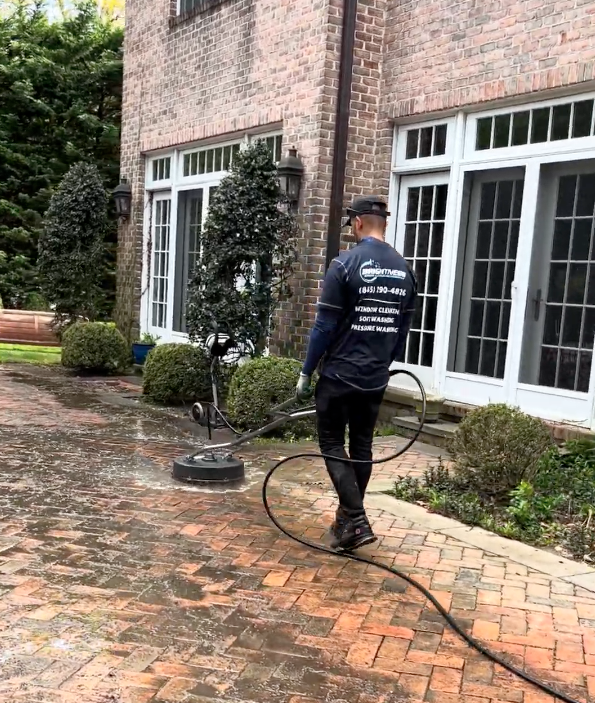
Brick can take pressure, but only if the mortar is in good shape. Older brick with crumbling mortar joints (common on a lot of Bergen, Essex, and Westchester pre-war homes) will lose mortar fast under a power washer — and you’re suddenly looking at a $4,000+ repointing job.
The right approach: inspect the mortar first. If the joints are solid and uncracked, a moderate-pressure wash works. If you see crumbling, missing mortar, or efflorescence (white salty deposits), soft wash instead. We covered this in more detail in Does Power Washing Damage Brick.
Surface 3: Stucco — Soft Wash Only
Stucco looks tough but it’s actually porous and brittle. A power washer chips the texture, drives water into the wall cavity, and on a cold NJ winter morning a wet stucco wall can crack as the trapped moisture freezes.
The right approach: soft wash with a stucco-safe solution. Slow and patient. Never use a metal scraper or stiff brush — both leave visible marks that won’t blend.
Surface 4: Wood Siding, Cedar Shake, and Decks — Soft Wash
Wood is the easiest surface to wreck with a power washer. High pressure raises the grain, splinters the surface, strips stain and sealant, and forces water into the wood where it accelerates rot. A power washer can damage a cedar shake roof in a single pass.
The right approach: soft wash, low pressure, gentle technique. For decks, refinish or restain after cleaning — wood opens up when wet and needs to be sealed back up.
Surface 5: Roof Shingles — Soft Wash, Never Power Wash
This one is non-negotiable. Power washing a roof strips the protective granules off asphalt shingles, voids almost every shingle manufacturer warranty, and shortens roof life by years. The black streaks you’re trying to clean are caused by Gloeocapsa magma algae — a chemistry problem, not a pressure problem.
The right approach: soft wash with a roof-safe algaecide. Our soft wash roof cleaning service covers exactly this. We also wrote about the seasonal timing in 5 Reasons to Soft Wash Your Roof Before Fall.
Surface 6: Concrete Driveways and Sidewalks — Power Wash
This is what power washers were made for. Concrete is dense and durable, and high-pressure water lifts oil stains, tire marks, salt damage, and ground-in grime that no other method touches.
The right approach: power wash with the right tip and the right distance. A surface cleaner attachment (a round attachment that spreads the spray) gives a more even finish than a single-point wand. Avoid lingering in one spot — even concrete will etch if you camp on it.
Surface 7: Pavers — Power Wash + Re-Sand
Pavers can take power washing, but the joints can’t — the water blows the polymeric sand right out from between the pavers. After every power wash, the sand needs to be replaced. Our paver sand seal service handles the re-sanding and sealing as a combined step.
Surface 8: Painted Exteriors — Soft Wash
If your house is painted (clapboard, trim, or any exterior paint), soft wash only. Power washing peels paint, exposes substrate, and creates a much bigger repaint project than you started with. Especially relevant for older Bergen and Westchester homes with century-plus paint history.
A Quick Reference Table
- Vinyl siding → Soft wash
- Brick (good mortar) → Power wash, moderate pressure
- Brick (crumbling mortar) → Soft wash
- Stucco → Soft wash
- Wood siding / shake / decks → Soft wash
- Roof shingles → Soft wash (never power wash)
- Concrete driveway / sidewalk → Power wash
- Pavers → Power wash + re-sand
- Painted exteriors → Soft wash
- Brick patio → Power wash, then re-seal
When to Hand It Off
A consumer power washer in untrained hands is the most-returned tool at Home Depot for a reason. OSHA’s hand and power tool safety resources cover the basics, but the short version is that high-pressure water can cut skin like a knife at the wrong distance. Add ladder work on a two-story house and the risk profile climbs fast.
For most NJ and NY metro homes, a once-a-year professional combination service — soft wash for siding, roof, and painted surfaces; power wash for the driveway, sidewalk, and patio — does the whole exterior in one visit, with the right method on every surface. Spring is the right timing for most of our customers, paired with the seasonal power-washing window we covered for the rest of the year.
Ready to Stop Guessing?
If you’re not sure what your house needs surface by surface, we’d be happy to walk through it with you. Request a free estimate and we’ll recommend the right method for each surface on your home — across Bergen, Essex, Passaic, Rockland, and Westchester.